
Richard Hourican |
Planning a loft conversion, structural opening, chimney breast removal or other work to a shared wall in London? You may need to understand Section 2 of the Party Wall etc. Act 1996 before work begins.
Section 2 is the part of the Act that deals with works directly affecting an existing party wall, party fence wall or party structure. In practical terms, it often applies where a building owner wants to cut into, raise, thicken, underpin, repair, demolish, rebuild or otherwise alter a shared structure.
For many London homeowners, Section 2 becomes relevant when structural steel beams, padstones, chimney alterations, roof works or internal structural changes interact with a party wall. If the works are notifiable, the building owner will usually need to serve a Party Structure Notice before starting the relevant work.
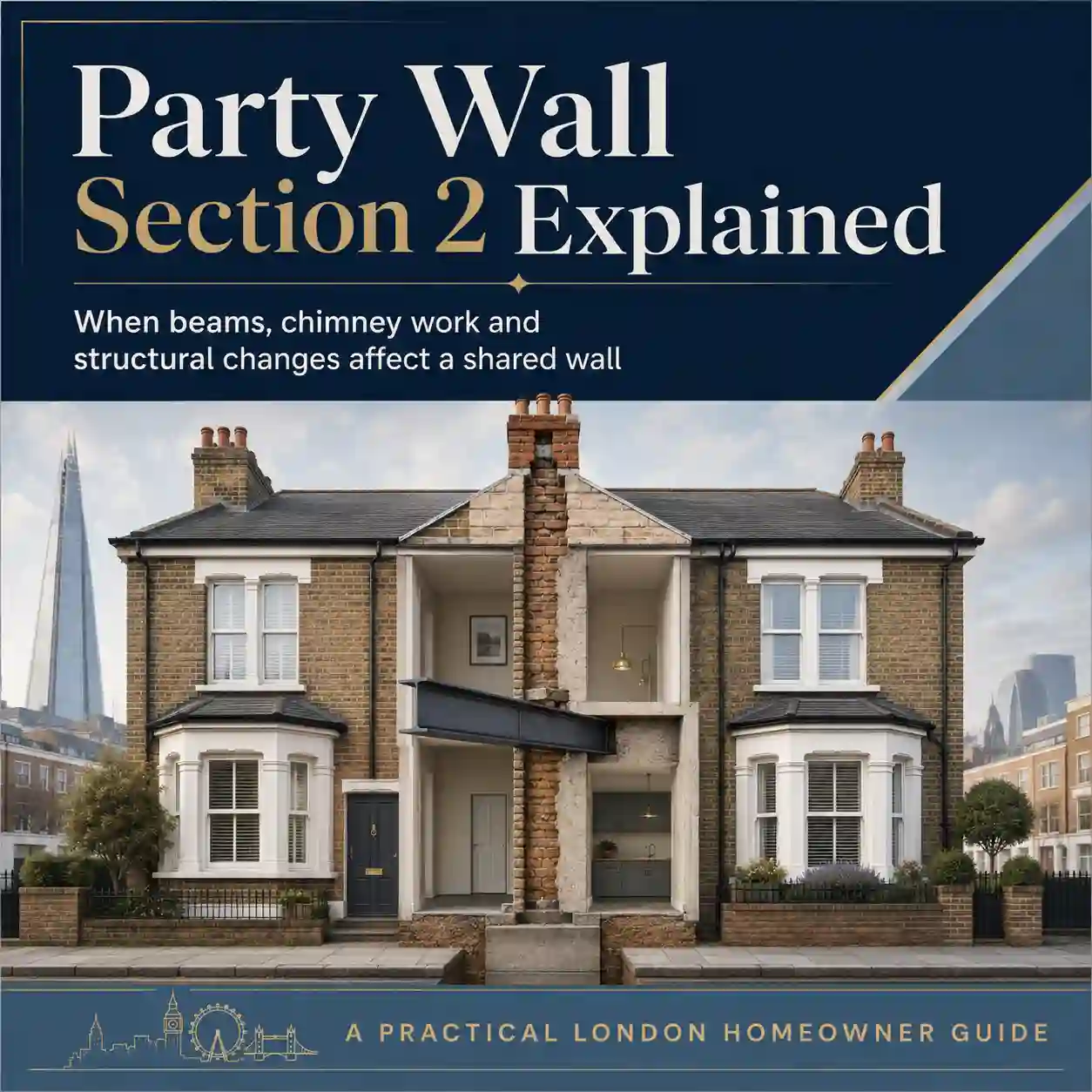
Quick Answer: What Is Party Wall Section 2?
Party Wall Section 2 covers certain works to existing party walls and party structures. Common examples include cutting into a party wall for steel beams, raising a party wall, underpinning, demolishing and rebuilding, inserting flashings, repairing a party wall, or altering a shared structural element between properties.
A Section 2 Party Structure Notice is usually served at least two months before the planned start date for the notifiable works. If the adjoining owner consents in writing, the project may proceed in line with the Act. If they dissent or fail to respond where the Act treats this as a dispute, surveyors are usually appointed and a Party Wall Award may be required.
What Is a Party Structure?
A party structure is wider than a party wall. It can include a wall, floor, partition or other structure separating buildings or parts of buildings in different ownership. This is particularly important in London flats, maisonettes and converted houses, where floors or separating walls can fall within the Party Wall process.
A party wall is usually a wall shared by two properties. It may stand astride the boundary, separate two buildings, or stand on one owner’s land but be used by both owners to separate their buildings. A party fence wall can also be relevant where a masonry garden wall stands astride the boundary, although timber fences are not party fence walls.
For a more detailed assessment of structural works to a shared wall or floor, see our Party Wall Survey for Party Structure Works in London service.
Common Section 2 Works in London Homes
Section 2 is commonly triggered by practical building works rather than by the project name alone. A loft conversion, refurbishment or extension may or may not need a Section 2 notice depending on exactly what is being done to the shared structure.
Common examples include:
- cutting into a party wall to insert steel beams;
- forming pockets or padstone bearings in a shared wall;
- raising a party wall as part of a roof or loft project;
- cutting flashings into an adjoining building where roof levels meet;
- removing or altering chimney breasts connected to a party wall;
- demolishing and rebuilding a party wall;
- underpinning the whole thickness of a party wall;
- repairing, rebuilding or strengthening a shared structural wall;
- works to floors or partitions between flats or maisonettes.
A good rule of thumb is this: if the work affects the structural strength, support, weathering or integrity of a shared wall, floor or partition, it should be checked before work begins.
Section 2 vs Section 1 vs Section 6
The Party Wall etc. Act 1996 covers three broad categories of work. Understanding the difference helps avoid serving the wrong notice.
Section 1 deals with new walls built at or astride the line of junction between neighbouring land. This often comes up with side or rear extensions and boundary walls. Read our guide to Party Wall Section 1 for more detail.
Section 2 deals with work to an existing party wall or party structure. This is the focus of this article and is common for steel beams, chimney breast removal, party wall raising and internal structural alterations.
Section 6 deals with excavation near neighbouring buildings or structures, including the 3 metre and 6 metre rules. Read our guide to Party Wall Section 6 if your project involves foundations, basements or deeper excavation.
Many London projects need more than one notice. For example, a loft conversion may involve Section 2 works to insert steels into a party wall. A rear extension may involve Section 1 boundary wall issues and Section 6 excavation issues. A basement scheme may involve Section 6 excavation and Section 2 underpinning or party wall works.
Do Small Wall Works Need a Party Structure Notice?
Not every small job to a party wall requires a Party Structure Notice. Ordinary household works such as fixing shelves, drilling plugs for wall units, minor recessed sockets or replastering may be too minor in many cases.
The key question is whether the proposed work could affect the structural strength, support function or neighbouring side of the wall. If the work is purely decorative or light-touch, a notice may not be necessary. If the work involves structure, load-bearing support, cutting, demolition, underpinning, weathering or risk of damage to the adjoining side, the position should be checked properly.
When in doubt, send your drawings or a short description of the works to a specialist surveyor before assuming the Act does not apply.
When Should a Section 2 Party Structure Notice Be Served?
A Party Structure Notice for Section 2 works is usually served at least two months before the planned start date for the relevant notifiable works. The notice should not be left until the contractor is ready to start on site.
A valid notice should usually include:
- the building owner’s full name and address;
- the address where the works are proposed;
- details of the adjoining owner where known;
- a clear description of the proposed works;
- the intended start date;
- the relevant section of the Act;
- enough information for the adjoining owner to understand what is proposed;
- plans, sections or structural details where helpful or necessary.
For support preparing and serving the correct notice, see our Party Wall Notices in London service.
What Happens After a Section 2 Notice Is Served?
Once the notice has been served, the adjoining owner can usually:
- consent in writing;
- dissent and appoint their own surveyor;
- dissent and agree to use one Agreed Surveyor;
- fail to respond.
If the adjoining owner consents in writing, there is no dispute at that stage, although the building owner still has duties under the Act. Consent does not give permission to cause unnecessary inconvenience or damage.
If the adjoining owner dissents or fails to respond within the relevant response period, a statutory dispute may arise. That does not necessarily mean there is an argument. It usually means the surveyor procedure is now needed so the works can be authorised and controlled through a Party Wall Award.
Where one impartial surveyor is appointed by both owners, this is known as the Agreed Surveyor route. Alternatively, each owner may appoint their own surveyor.
What Does a Party Wall Award Do in a Section 2 Matter?
A Party Wall Award sets out how the notifiable works may proceed. For Section 2 works, the Award may deal with:
- the authorised works;
- drawings and structural information;
- working methods and sequencing;
- access arrangements;
- temporary protection and weathering;
- working hours;
- safeguards for the adjoining property;
- how damage will be inspected, made good or compensated;
- surveyor costs and responsibilities;
- a Schedule of Condition.
For more detail on this stage, see our Party Wall Awards London service.
Why a Schedule of Condition Is Important
A Schedule of Condition is a written and photographic record of the adjoining property before work starts. It is commonly recommended for Section 2 works because structural alterations to shared walls can lead to later concerns about cracking, movement, finishes or damage.
The Schedule of Condition helps both owners by recording what was already present before the works began. If an issue is raised later, there is a clear baseline to compare against.
See our Schedule of Condition Surveys in London page for more information.
Common Project Examples
Loft conversions
Loft conversions often involve Section 2 where steel beams, padstones, party wall raising, flashings or chimney alterations affect a shared wall. See our Party Wall Loft Conversion London service for project-specific guidance.
Chimney breast removal
Chimney breast removal can involve cutting, support, making good and structural alterations to a party wall. It is one of the most common Section 2 scenarios in terraced and semi-detached London homes. See our Party Wall Chimney Removal London service.
Structural openings and steel beams
New openings, beams and padstones may require careful review where load is transferred into or near a party wall. The structural engineer’s drawings are important because the notice must reflect what is actually proposed.
Flats and maisonettes
Section 2 can also matter where works affect a separating floor, ceiling or wall between flats. These projects often involve leasehold ownership, managing agents or freeholders, so identifying the correct adjoining owners can be more involved.
Building Owner Checklist
Before starting Section 2 works, check:
- Have the structural drawings been reviewed for party wall implications?
- Does the work cut into, alter, raise, demolish, rebuild or underpin a shared structure?
- Are all relevant adjoining owners identified?
- Has the correct notice been served with enough time?
- Has the adjoining owner responded in writing?
- If there is dissent or no response, have surveyors been appointed?
- Is a Schedule of Condition needed?
- Has a Party Wall Award been agreed and served before notifiable works begin?
Adjoining Owner Checklist
If you receive a Section 2 Party Structure Notice, check:
- Do you understand what works are proposed?
- Are drawings or structural details included where needed?
- Could the works affect your wall, floor, finishes, chimney, roof junction or support?
- Do you want to consent, dissent and appoint your own surveyor, or use an Agreed Surveyor?
- Would a Schedule of Condition help protect both sides?
- Do you need independent advice before responding?
For support if you have received a notice, see our Adjoining Owner’s Surveyor Services page.
Need Help with a Section 2 Party Structure Notice?
Section 2 can be straightforward when the works are clearly described, the correct owners are notified and the process is started early. Problems usually arise when notices are missed, served too late, or based on unclear drawings.
Hourican Associates can review your plans, confirm whether Section 2 applies, prepare valid notices, advise on neighbour responses and agree Party Wall Awards where required.
Frequently Asked Questions

Richard Hourican, Company Director
BSc (Hons). HND Build. MCIOB. C.Build E MCABE. ARICS. MFPWS. MPTS
As a specialist Party Wall surveyor, Richard Hourican will protect your interests during building works.
Are you planning a building project – perhaps an extension, loft conversion or basement – that is on or adjacent to your property’s boundary line? Or has a ‘Party Wall’ notice dropped on the doormat informing you of a neighbour’s impending works?
It’s essential to understand all the implications of building plans. If you don’t, it could cost thousands. Our job is to ensure everything is done correctly – and that it doesn’t!
Follow us: